[CASE STUDY · WORLD + CONCEPT + UX]

AMBYLON METAVERSE

Lead designer for Ambylon’s 3D and VR learning world — education, networking, and play across desktop and headset.
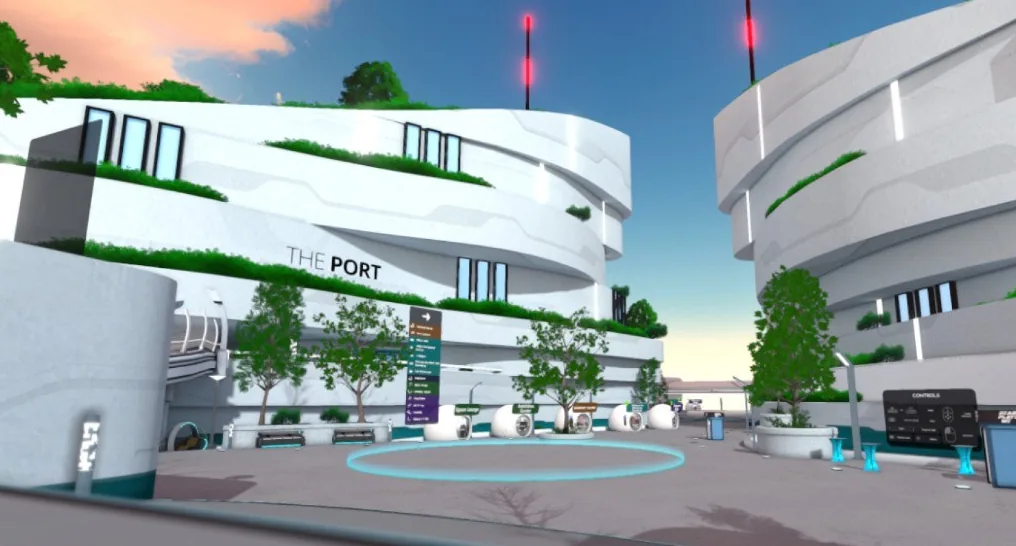
Ambylon world hub The Port — multi-tier white buildings with greenery, spawn ring, and directory signage
The Port Arrival district with wayfinding, spawn points, and layered architecture.
Ambylon thematic learning environment — IT campus corridor with Python Basics entrance
Thematic learning Subject-aligned campuses tuned to the curriculum they host.
Ambylon event and networking hub under a geodesic dome
Event & networking Conferences, seminars, and workshops in a shared arena.
Ambylon landmark — Pyramids of Giza
Pyramids of Giza Historical landmark destinations for presence and memory.
Ambylon landmark — Forum Romanum
Forum Romanum Reconstructed historical places for immersive learning moments.
Ambylon virtual classroom with floating course UI
Virtual classroom In-world e-learning stations bridging presence and course content.

ABOUT THE WORK

Role
Lead Designer — 3D metaverse
Company
Dicebridge Training (~4 years)
Product
Ambylon 3D / VR
Platforms
Desktop 3D application · standalone VR app

Where Ambylon 2D delivers structured courses in the browser, the metaverse is the immersive counterpart — thematic campuses, landmark places, event hubs, and virtual classrooms. I shaped world design, concept direction, and interaction UX so learners can orient, move, and meet without losing the didactic intent of the 2D platform.

Speed mattered too. With a tight timeline, I used whatever techniques got strong results fast — modular kits, reuse, and lean concept-to-build shortcuts — so the worlds still felt ambitious.

Outcome: a distinctive immersive layer on top of the LMS — one learning ecosystem spanning browser and 3D/VR.

Product: ambylon.com/metaverse · Company: dicebridge.com/ambylon

Ambylon 2D